
Driving on a learner's licence: the supervising driver's role
About to supervise your teen, your partner or a relative who is learning to drive? Here is who is allowed to do it, what the law and the SAAQ expect from you, a simple practice plan and the mistakes to avoid.
The rules of the learner's licence itself (age, cost, validity, demerit points) are covered in our full guide. This article is for the other person in the car: you, the accompanying rider. Between the on-road sessions with the instructor, the learner will build most of their experience with you. Your role matters far more than most people think.
Who can be the accompanying rider?
Quebec's Highway Safety Code (section 99) is specific. The learner must be accompanied by a person who has held a valid licence of the appropriate class for at least two years, which means Class 5 for a passenger vehicle. That person must be seated beside the learner and be able to provide help and advice.
In practice:
- a parent, an older sibling or a friend who has held a full licence for at least two years can supervise;
- a probationary licence holder cannot act as an accompanying rider for a learner, even if they have been driving for a while;
- the accompanying rider sits in the front passenger seat, not in the back.
Pick the right person. The SAAQ recommends choosing someone patient, calm and understanding who knows the Highway Safety Code well. A great driver who loses their cool easily is not always the best supervisor.
Fit to supervise: alcohol, fatigue and focus
For the learner, the rule is simple: zero alcohol. For the accompanying rider, the SAAQ points the same way in its accompanying rider guide and in the family contract it suggests: the parent agrees not to act as the accompanying rider when under the influence of alcohol or drugs. It makes sense: the law requires you to be able to help and advise the learner at all times.
Fatigue matters too. The SAAQ guide recommends ending the session as soon as you or the learner become nervous, tired or irritable. Put your phone away: your eyes belong on the road, not on a screen.
Had a drink with dinner on practice night? Reschedule. You are the person who has to react if the learner hesitates or makes a mistake. This is not the time for slower reflexes.
Why practice between course sessions matters
The driving course is organized in 4 phases. The on-road sessions with the instructor teach the techniques, but they are not enough to make them automatic. Regular practice in a variety of settings is what builds real confidence.
The SAAQ suggests waiting until the learner has completed the Phase 2 on-road sessions, where they learn to handle the vehicle, before starting practice with an accompanying rider. After that, some experts cited by the SAAQ recommend at least 50 hours of accompanied driving, including some driving at night. The SAAQ also offers a free accompanied driving log to record each session: date, duration, setting, weather and manoeuvres practised.
| Course phase | What you practise together |
|---|---|
| Phase 2: guided driving | Wait until the on-road sessions of this phase are done before your first practice |
| Phase 3: semi-guided driving | Parking manoeuvres, residential areas, then busier roads and the highway |
| Phase 4: towards independence | More complex situations, fewer interventions from you |
A simple practice plan, stage by stage
The SAAQ guide recommends starting in an area with little traffic, then gradually raising the difficulty. Here is an easy progression. Only move to the next stage once the previous one feels comfortable.
A Sunday morning in a large parking lot. Starting, braking smoothly, turning, reversing, parking between the lines. The learner gets a feel for the car with no pressure.
Stop signs, right of way, pedestrians, cyclists and parked cars. Low speed, lots of observation. This is the ideal place to build the OEA habit.
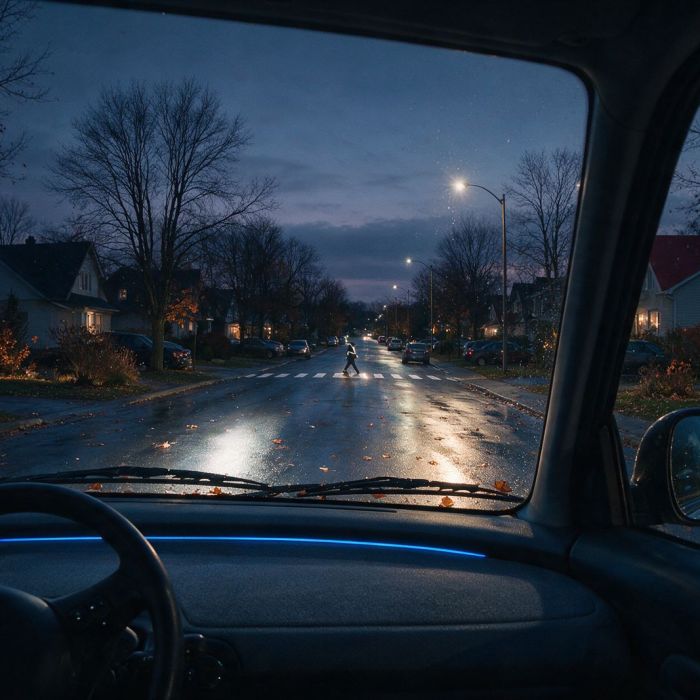
Boulevards, intersections with traffic lights, lane changes, left turns. Vary the times: daytime, evening, then rain once the learner is ready.
On-ramps, exits, merging and keeping a safe following distance. Wait until the instructor has covered highway driving in the course, then pick a low-traffic time.
Giving instructions calmly
Your tone has a direct effect on how the learner drives. The SAAQ guide's advice comes down to a few habits:
- Give advice, not orders. Explain what to do and why.
- Skip the "Careful!" A vague shout creates stress without saying what to do. Try instead: "Slow down, the light is about to change."
- Announce early. "At the next light, turn right" leaves time to observe, signal and get into position.
- Save the debrief for home. Go over mistakes once you are back, not while the learner is driving.
- Let them assess themselves first. Ask what went well and what they would improve, then share your view.
Habits to model: the OEA strategy
In the course, the learner is taught the SAAQ's OEA strategy:
- Observe the environment and detect potential risks;
- Evaluate the risks and find solutions to eliminate or reduce them;
- Act by applying the most appropriate and safest solution.
During practice, ask the learner to think out loud: "I see a ball near that parked car, there could be a child, I'm slowing down." And when you are the one driving, lead by example: full stops, shoulder checks, speed limits. The SAAQ asks the accompanying rider to be a role model behind the wheel. Learners pick up your habits far more than they listen to your advice.
Common supervisor mistakes
- Driving for the learner by calling out every move instead of letting them observe and decide.
- Passing on your own bad habits: rolling stops, speeding, so-so courtesy.
- Skipping stages by heading to a big boulevard or the highway too soon.
- Pushing through fatigue or stress, on either side, instead of taking a break.
- Criticizing while the learner drives, which raises tension and leads to more mistakes.
- Staying too involved near the end: in Phase 4, step back so the learner becomes independent.
Frequently asked questions
No. The accompanying rider must have held a valid licence of the appropriate class for at least two years, and a probationary licence does not allow its holder to supervise a learner.
No. Under section 99 of the Highway Safety Code, they must be seated beside the learner and able to provide help and advice.
Some experts cited by the SAAQ recommend at least 50 hours of accompanied driving, including some at night. The SAAQ's accompanied driving log helps you keep track.
The SAAQ suggests waiting until the learner has completed the Phase 2 on-road sessions. Check with the instructor where the learner stands before tackling a new situation.
Instructor and supervisor, one team
At Vision Plus, a SAAQ-recognized school with 5 branches from Laval to Saint-Jérôme, our instructors teach the official program and the OEA strategy you will reinforce during practice.
Register onlineInformation verified in October 2026. LégisQuébec: Highway Safety Code, section 99. SAAQ: first driver's licence, accompanying rider guide, Module 6: accompanied driving and accompanied driving log. Rules can change: check these sources for the current version.